


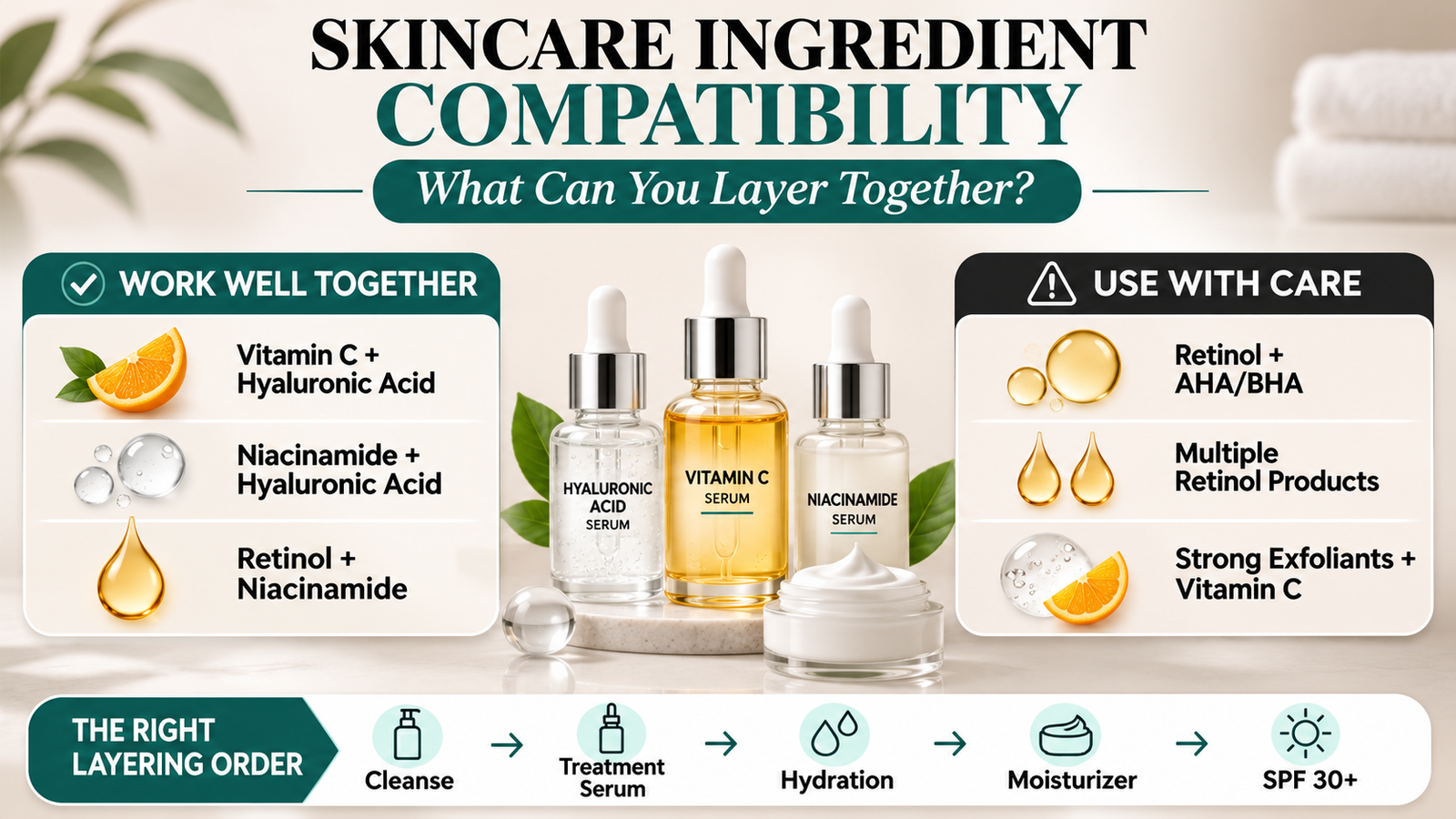
Skincare Ingredient Compatibility: What Can You Layer Together? Choosing the right skincare products is important, but understanding how different ingredients work together is equally essential. Many people invest in serums, moisturizers, exfoliants and anti-aging products without knowing whether these ingredients are compatible. Using too many active ingredients together can sometimes cause irritation, dryness, redness or damage to the skin barrier.
Understanding skincare ingredient compatibility helps you create a balanced routine that supports hydration, skin texture, an even-looking complexion and overall skin health.
Whether you are building a morning skincare routine or improving your nighttime routine, knowing which ingredients can be layered together can make your skincare journey easier.
At Athena Skin Care, a skin care clinic in Burnaby, British Columbia, understanding individual skin needs is an important part of choosing appropriate skincare treatments and products.
1. What Is Skincare Ingredient Compatibility?
Skincare Ingredient Compatibility. Skincare ingredient compatibility refers to how different skincare ingredients work together when applied to the skin.
Some ingredients complement each other and provide multiple benefits. For example, hyaluronic acid helps attract moisture, while niacinamide supports the skin barrier. These ingredients can generally be used together in the same routine.
However, certain combinations may increase the possibility of irritation, particularly when several strong active ingredients are introduced at once.
The goal is not to use as many ingredients as possible. Instead, it is to select products that work well together and suit your skin type.
2. Skincare Ingredients You Can Layer Together
Here are some popular skincare ingredients that generally work well together.
Hyaluronic Acid + Vitamin C
Hyaluronic acid and vitamin C are a popular combination for people looking to support hydration and improve the appearance of dull skin.
- Hyaluronic Acid: Helps attract and retain moisture.
- Vitamin C: An antioxidant that helps protect the skin from environmental oxidative stress and supports a brighter-looking complexion.
You can generally apply a vitamin C serum followed by a hyaluronic acid serum and moisturizer. Follow the product instructions and apply sunscreen during the daytime.
This combination can be suitable for people who want hydration and antioxidant support in their daily skincare routine.
Niacinamide + Hyaluronic Acid
Niacinamide and hyaluronic acid are generally compatible and can be used together.
Niacinamide, also known as vitamin B3, supports the skin barrier and can help improve the appearance of uneven skin tone. Hyaluronic acid helps maintain skin hydration.
Potential benefits include:
- Supporting skin hydration.
- Improving the appearance of skin texture.
- Supporting the skin’s natural barrier.
- Helping maintain a balanced-looking complexion.
This combination can be useful for people who prefer a simple, hydration-focused routine.
Retinol + Hyaluronic Acid
Retinol is a vitamin A derivative commonly used in skincare products targeting fine lines, uneven texture and signs of ageing.
However, retinol can cause dryness, peeling or irritation, especially when first introduced.
Hyaluronic acid can complement a retinol routine by providing hydration.
A simple nighttime routine may include:
- Cleanse your face with a gentle cleanser.
- Allow your skin to dry.
- Apply retinol according to the product instructions.
- Follow with a hyaluronic acid serum if suitable.
- Finish with a moisturizer.
Beginners should introduce retinol gradually rather than applying it every night immediately. Avoid retinoids during pregnancy unless specifically advised otherwise by a qualified healthcare professional.
Retinol + Niacinamide
Retinol and niacinamide can generally be used together.
Retinol supports skin renewal and helps improve the appearance of fine lines and uneven texture. Niacinamide helps support the skin barrier and maintain hydration.
Using both ingredients in a routine may be helpful for people looking to address multiple skin concerns.
However, start slowly and monitor how your skin responds. If irritation develops, reduce the frequency or separate the ingredients into different routines.
Vitamin C + Sunscreen
Vitamin C and sunscreen are a useful combination in a morning skincare routine.
Vitamin C provides antioxidant support, while sunscreen helps protect the skin against ultraviolet radiation.
A simple morning routine:
- Gentle cleanser.
- Vitamin C serum.
- Moisturizer.
- Broad-spectrum SPF 30 or higher sunscreen.
Remember that vitamin C does not replace sunscreen. Daily sun protection remains essential.
3. Skincare Ingredients You Should Use Carefully Together
Not every combination is necessarily harmful, but certain combinations can increase irritation, especially for sensitive skin.
Retinol + AHA/BHA Exfoliants
Retinol, glycolic acid, lactic acid and salicylic acid are active ingredients used for different skin concerns.
Combining multiple strong actives in one routine may increase dryness, redness, peeling and irritation.
For beginners, consider using an exfoliating product on one night and retinol on another night, rather than combining them immediately.
Vitamin C + Strong Exfoliating Acids
Vitamin C and exfoliating acids are not universally incompatible. However, using strong formulations together may cause irritation in some individuals.
If you have sensitive skin, consider separating these ingredients into different routines.
Introduce new products gradually and avoid adding multiple active ingredients at the same time.
Multiple Retinol Products
Using several retinol-based products together does not necessarily improve results.
Instead, it may increase irritation and dryness.
Choose one appropriate retinol product and follow its recommended application frequency.
4. Skincare Ingredient Compatibility Chart
Use this quick-reference chart when planning your skincare routine.
| Ingredient Combination | Compatibility | General Guidance |
|---|---|---|
| Vitamin C + Hyaluronic Acid | Generally compatible | Supports antioxidant care and hydration |
| Niacinamide + Hyaluronic Acid | Generally compatible | Supports hydration and skin barrier |
| Retinol + Hyaluronic Acid | Generally compatible | Combine with a suitable moisturizer |
| Retinol + Niacinamide | Generally compatible | Introduce gradually |
| Vitamin C + Sunscreen | Recommended combination | Use sunscreen every morning |
| Retinol + AHA/BHA | Use cautiously | Consider alternating nights |
| Vitamin C + Strong Exfoliants | Use cautiously | Monitor sensitivity |
| Multiple Retinol Products | Avoid layering | Choose one retinol product |
Compatibility can depend on concentration, formulation, skin condition and frequency of use. Always follow product-specific instructions.
5. How to Layer Skincare Products in the Correct Order
The order in which you apply skincare products can influence how comfortably they fit into your routine.
A general guideline is to apply products from lighter textures to heavier textures, while following the specific instructions for each formulation.
Morning Skincare Routine
A simple morning routine can include:
Step 1: Cleanser
Use a gentle cleanser to remove overnight oil, sweat and impurities.
Step 2: Vitamin C Serum
Apply a vitamin C serum if it suits your skin and your skincare goals.
Step 3: Hyaluronic Acid or Niacinamide
Use a hydrating or barrier-supporting serum.
Step 4: Moisturizer
Apply moisturizer to help maintain skin hydration.
Step 5: Sunscreen
Finish with broad-spectrum SPF 30 or higher sunscreen. Reapply as directed, especially when spending time outdoors.
Nighttime Skincare Routine
Your nighttime skincare routine can focus on hydration and selected active ingredients.
Step 1: Cleanser
Remove sunscreen, makeup, dirt and excess oil.
Step 2: Treatment Serum
Apply one suitable active ingredient, such as retinol, according to its instructions.
Step 3: Hydrating Serum
Use hyaluronic acid if appropriate.
Step 4: Moisturizer
Finish with a moisturizer to support the skin barrier.
You do not need to use every skincare ingredient every day. A simple routine that suits your skin is often more practical than a complicated routine with too many active products.
6. Common Skincare Layering Mistakes to Avoid
Even good skincare ingredients can cause problems when used incorrectly.
Here are some common mistakes:
1. Using Too Many Active Ingredients
Combining multiple serums, exfoliants and retinoids can increase irritation.
2. Skipping Sunscreen
Using vitamin C, retinol or exfoliating products without appropriate daytime sun protection can undermine your skincare goals.
3. Introducing Multiple New Products Together
Start with one new product at a time so you can identify possible irritation or sensitivity.
4. Ignoring Your Skin Type
Dry, oily, combination and sensitive skin may respond differently to the same ingredients.
5. Over-Exfoliating
Frequent exfoliation can disrupt the skin barrier and lead to redness, dryness and discomfort.
6. Expecting Immediate Results
Most skincare routines require consistency and patience. Results vary depending on the ingredient, formulation and individual skin condition.
7. How to Choose the Right Skincare Ingredients for Your Skin Type
Your skin type and individual concerns should guide your product selection.
| Skin Type | Ingredients to Consider | Main Focus |
|---|---|---|
| Dry Skin | Hyaluronic Acid, Ceramides | Hydration and barrier support |
| Oily Skin | Niacinamide, Salicylic Acid | Oil balance and congestion |
| Combination Skin | Niacinamide, Hyaluronic Acid | Balanced hydration |
| Sensitive Skin | Gentle moisturizers, Ceramides | Barrier support |
| Mature-Looking Skin | Retinol, Peptides, Vitamin C | Texture and visible signs of ageing |
| Dull-Looking Skin | Vitamin C, Gentle Exfoliants | Brighter-looking complexion |
These are general suggestions, not medical recommendations. Your skin may need a different combination depending on its condition and sensitivity.
8. When Should You Consult a Professional Skin Care Clinic in Burnaby?
If you are unsure which skincare ingredients to combine, experiencing repeated irritation or struggling to find suitable products, professional guidance can help you make more informed decisions.
A professional skincare consultation can help you understand:
- Your individual skin concerns.
- Which ingredients may suit your routine.
- How to introduce active ingredients gradually.
- Which skincare treatments may be appropriate.
- How to maintain a consistent skincare routine.
If you are searching for a Skin Care Clinic in Burnaby, Athena Skin Care offers skincare services and facial treatment options for clients looking to address different skin concerns.
The clinic offers services including acne facials, anti-aging facials, pigmentation facials, brightening facials and RF microneedling.
The right treatment depends on your skin condition, expectations and professional assessment.
9. Frequently Asked Questions About Skincare Ingredient Compatibility
Can I use Vitamin C and Niacinamide together?
Yes. Vitamin C and niacinamide are generally compatible and can be used in the same skincare routine. Introduce products gradually and monitor your skin’s response.
Can I apply Hyaluronic Acid after Retinol?
Yes. Hyaluronic acid can generally be used alongside retinol to support skin hydration. Follow the instructions of your products and use a moisturizer.
Can I use Retinol every night?
Not necessarily. Beginners should start with a lower frequency and increase gradually if their skin tolerates it. Follow product instructions and seek professional advice if irritation persists.
Which skincare ingredients should not be mixed?
There is no universal list of ingredients that must never be combined. However, combining multiple strong exfoliants and retinoids can increase irritation. Your skin sensitivity and product formulations matter.
Is Niacinamide suitable for sensitive skin?
Niacinamide is generally well tolerated and can support the skin barrier. However, some people may still experience irritation, particularly with hi
Table of Contents
- What Is Skincare Ingredient Compatibility?
- Skincare Ingredients You Can Layer Together
- Hyaluronic Acid + Vitamin C
- Niacinamide + Hyaluronic Acid
- Retinol + Hyaluronic Acid
- Retinol + Niacinamide
- Vitamin C + Sunscreen
- Skincare Ingredients You Should Use Carefully Together
- Retinol + AHA/BHA Exfoliants
- Vitamin C + Strong Exfoliating Acids
- Multiple Retinol Products
- Skincare Ingredient Compatibility Chart
- How to Layer Skincare Products in the Correct Order
- Morning Skincare Routine
- Nighttime Skincare Routine
- Common Skincare Layering Mistakes to Avoid
- How to Choose the Right Skincare Ingredients for Your Skin Type
- When Should You Consult a Professional Skin Care Clinic in Burnaby?
- Frequently Asked Questions About Skincare Ingredient Compatibility