

Table of Contents
Introduction – Identify Your Skin Type
Booking a facial without knowing your skin type is a bit like buying shoes without knowing your size. You might get lucky. More often, you end up with a treatment that is too harsh, too rich or simply wrong for what your skin needs.
The good news is that you can identify your skin type at home in under an hour, with nothing more than a gentle cleanser, a clean tissue and a mirror. This guide shows you how. It explains the five main skin types, gives you three simple tests, and then matches each type to the facials that suit it best.
The advice here follows the same steps a trained skin therapist uses during a consultation: look at oil, hydration, pore size, texture and how the skin reacts. Once you can identify your skin type with confidence, choosing a facial becomes far easier, and your results tend to last longer.
Why You Should Identify Your Skin Type Before Any Facial
Every facial is built around a few core steps: cleansing, exfoliation, extraction, treatment and protection. How strong each step should be depends on your skin. An acne facial with salicylic acid can be ideal for oily skin, yet leave dry skin tight and flaky. A rich hydrating mask can comfort dry skin, yet clog pores on oily skin.
When you identify your skin type first, you can:
- Pick a facial that targets your real concern, not a guess.
- Avoid irritation, breakouts and wasted money.
- Have a more useful conversation with your therapist.
- Build a home routine that supports the facial between visits.
The Five Main Skin Types to Know Before You Identify Your Skin Type
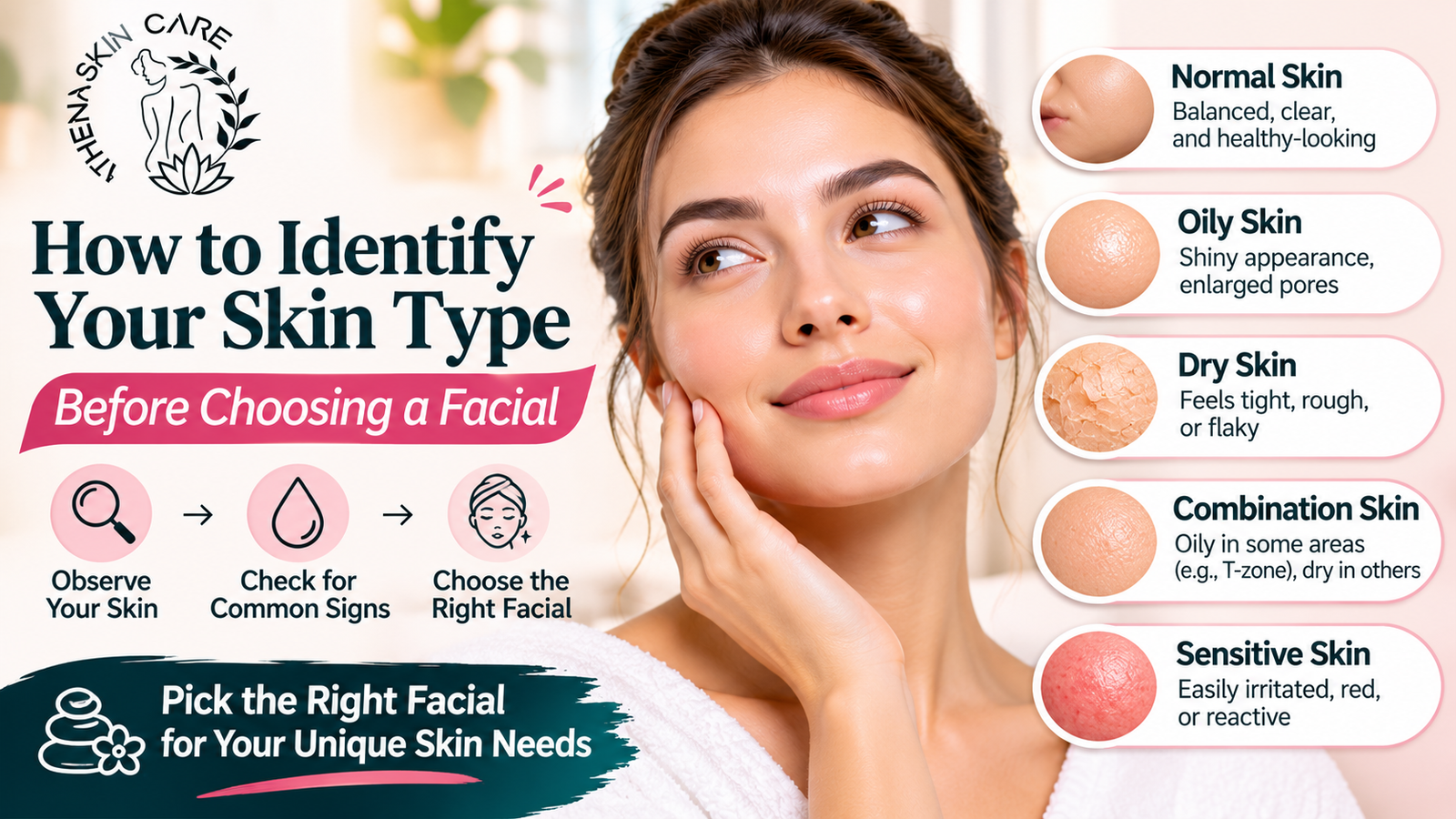
Before you try to identify your skin type, it helps to know what you are looking for. Skin therapists usually describe five types.
| Skin type | How it feels | How it looks | Common concerns |
|---|---|---|---|
| Normal | Comfortable most of the day | Even texture, small pores | Few, mainly maintenance |
| Oily | Slick by midday | Shine across the whole face, visible pores | Blackheads, breakouts |
| Dry | Tight, especially after washing | Dull, fine flaking, small pores | Rough patches, fine lines |
| Combination | Oily in some areas, dry in others | Shiny T-zone, matte cheeks | Breakouts on forehead and nose, dry cheeks |
| Sensitive | Stings or itches easily | Redness, flushing | Reactions to products, heat and friction |
Normal Skin
Normal skin produces enough oil to stay soft without turning shiny. Pores are small, and breakouts are occasional. If you identify your skin type as normal, you can choose from almost any facial menu. Your goal is maintenance and protection rather than correction.
Oily Skin
Oily skin makes more sebum than it needs. Sebum is the natural oil that keeps skin supple, but in excess it mixes with dead cells and blocks pores. People with oily skin often notice shine by lunchtime, enlarged pores on the nose and cheeks, and regular blackheads or breakouts. The upside is that oily skin tends to show fine lines later. If you identify your skin type as oily, focus on balance rather than stripping.
Dry Skin
Dry skin produces too little oil, so the skin barrier struggles to hold water. It can feel tight after cleansing, look dull, and flake around the nose and eyebrows. Dry skin is different from dehydrated skin. Dry is a type. Dehydrated is a temporary condition that any skin type can have when it lacks water. Keep this in mind when you identify your skin type, because tightness alone does not always mean dry.
Combination Skin
Combination skin is the most common type. Usually the T-zone (forehead, nose and chin) is oily while the cheeks are normal or dry. If you identify your skin type as combination, you need a facial that can treat two zones differently, which is why it pays to identify your skin type accurately before booking.
Sensitive Skin
Sensitive skin reacts easily. It may sting with new products, flush with heat, or turn red after rubbing. Sensitivity can sit on top of any other type, so you can have oily sensitive skin or dry sensitive skin. If you identify your skin type as sensitive, tell your therapist before anything is applied.
How to Identify Your Skin Type at Home: Three Simple Tests
You do not need special equipment to identify your skin type. These three tests are used by skin therapists as a starting point, and you can do them in your bathroom.
Test 1: The Bare-Face Method
This is the most reliable way to identify your skin type at home.
- Wash your face with a mild, non-foaming cleanser. Pat it dry with a clean towel.
- Apply nothing. No toner, serum, moisturiser or sunscreen.
- Wait 30 minutes. Stay indoors at a normal room temperature so you identify your skin type without heat or cold skewing the result.
- Look closely in natural light and notice how your skin feels.
| What you notice after 30 minutes | Likely skin type |
|---|---|
| Tight all over, maybe flaky | Dry |
| Shine across forehead, nose, chin and cheeks | Oily |
| Shine only on the T-zone, cheeks comfortable or tight | Combination |
| Comfortable, no shine, no tightness | Normal |
| Red, itchy or stinging | Sensitive |
Test 2: The Blotting Sheet Test
This is quicker and works well if you want to identify your skin type on a busy day. It also gives you a visual record you can photograph and show your therapist.
- Cleanse your face and wait 30 minutes without products.
- Press a clean blotting sheet gently on your forehead, nose, chin and each cheek.
- Hold each sheet up to the light. The amount of oil on each sheet will help you identify your skin type zone by zone.
If the sheets show little or no oil, you likely have dry skin. Oil only from the T-zone points to combination skin. Oil from every area suggests oily skin. A small amount of oil everywhere usually means normal skin.
Test 3: The Watch-and-Wait Method
Some people prefer a slower way to identify your skin type: watching it over several normal days, not just 30 minutes. Note how your skin feels at waking, at midday and in the evening for three or four days. Keep your routine the same. Patterns matter more than a single moment, and a short diary is one of the most honest ways to identify your skin type.
Tips for Accurate Results
- Do the test on a calm day, not after exercise, a hot shower or a new product.
- Avoid testing during the first few days after a peel, facial or sunburn.
- Hormones affect oil levels. Testing at different points in your cycle may give slightly different results.
- Medications such as retinoids and some acne treatments can make skin drier than it naturally is.
If your results look mixed when you identify your skin type, you are not doing it wrong. It is common to identify your skin type as combination with some sensitivity.
Matching Your Skin Type to the Right Facial
Once you identify your skin type, use this table as a starting point when you browse a facial menu.
| Skin type | Best facials to start with | Use with care |
|---|---|---|
| Normal | Glow and brightening facial, anti-aging facial | Very strong peels without a clear need |
| Oily | Acne facial, deep cleansing facial, salicylic acid peel | Heavy oils and thick creams |
| Dry | Hydrating facial, anti-aging facial, lactic acid peel | Strong drying acids, frequent dermaplaning |
| Combination | Customised facial that treats each zone, gentle peel | One-size-fits-all treatments |
| Sensitive | Calming or gentle glow facial | Fragrance, strong acids, aggressive extractions |
Best Facial for Oily Skin
If you identify your skin type as oily, these are the facials to look at first.
Oily and acne-prone skin does well with a deep cleansing or acne facial. These focus on clearing pores, careful extractions and calming inflammation. Salicylic acid is useful because it dissolves in oil and can get inside the pore. A good therapist will still hydrate the skin at the end, because stripping oily skin can make it produce even more oil.
Best Facial for Dry Skin
If you identify your skin type as dry, comfort comes first.
Dry skin needs facials that rebuild comfort. Look for hydrating or anti-aging facials with gentle exfoliation and rich, barrier-supporting masks. Lactic acid is a kinder exfoliant than glycolic acid for many dry skins, because it also helps the skin hold water.
Best Facial for Combination Skin
The best facial for combination skin is one that is customised. Your therapist can use a clay mask on the T-zone and a hydrating mask on the cheeks in the same session. This is why it is so useful to identify your skin type before you book, so you can ask for that kind of tailored service.
Best Facial for Sensitive Skin
Sensitive skin benefits from short, calming facials with few products. Avoid strong scrubs and heat. If you identify your skin type as sensitive, ask for a patch test if anything new will be applied. It is also fair to ask the therapist to explain each product before it goes on.
Best Facial for Normal Skin
If you identify your skin type as normal, you have the widest choice.
Normal skin can enjoy a brightening facial before an event or an anti-aging facial as a regular treat. Dermaplaning can also suit normal skin, giving a smooth finish that makes makeup sit better.
Signs by Face Zone That Help You Identify Your Skin Type
Looking at your face in zones is a practical way to identify your skin type, because most faces are not one uniform surface. Use a magnifying mirror and natural daylight from a window.
| Face zone | Signs of oil | Signs of dryness | Signs of sensitivity |
|---|---|---|---|
| Forehead | Shine, small bumps, blackheads | Fine flaking near the hairline | Redness after sweating |
| Nose | Visible pores, blackheads | Flaking around the sides | Broken capillaries |
| Cheeks | Shine on the upper cheeks | Tightness, rough patches | Flushing, stinging with products |
| Chin and jaw | Breakouts, often hormonal | Rarely dry | Irritation after shaving |
| Around the eyes | Rarely oily | Fine lines, crepey texture | Puffiness or itching |
Pore size is one of the clearest visual clues. Larger, more visible pores usually mean more oil. Very small, almost invisible pores often go with dry or normal skin. Texture is another clue. Rough patches point to dryness, while a thick, uneven surface with congestion points to oil.
When you identify your skin type by zone, write down what you see. Two oily zones and three normal zones is combination skin. Redness in every zone is a sign to treat your skin as sensitive, whatever its oil level.
Building a Home Routine After You Identify Your Skin Type
A facial works best when your home routine supports it. Once you identify your skin type, the core routine is simple: cleanse, treat, moisturise and protect. Only the products change.
| Skin type | Cleanser | Moisturiser | Weekly extra |
|---|---|---|---|
| Normal | Gentle gel or cream | Light lotion | Mild exfoliant once a week |
| Oily | Foaming or gel cleanser | Oil-free gel | Clay mask or salicylic acid |
| Dry | Cream or milk cleanser | Rich cream with ceramides | Hydrating mask |
| Combination | Gentle gel cleanser | Light lotion, richer on cheeks | Clay mask on T-zone only |
| Sensitive | Fragrance-free cream cleanser | Simple, fragrance-free cream | Skip exfoliants until skin settles |
Every skin type needs a broad-spectrum sunscreen of SPF 30 or higher during the day, even on grey Burnaby mornings. Sun exposure worsens pigmentation and breaks down collagen, whichever way you identify your skin type.
Introduce one new product at a time and give it two to four weeks. If you add several at once and your skin reacts, you will not know which one caused it. A simple routine also makes it easier to identify your skin type correctly later, because your skin is not reacting to a crowded shelf.
What to Tell Your Therapist Before a Facial
Once you identify your skin type, share these details at your consultation:
- Your test results and the type you believe you have.
- Any products you use, especially retinoids, acids or prescription creams.
- Allergies, recent sunburn, waxing or treatments in the past two weeks.
- What you want from the facial, such as fewer breakouts, more glow or softer lines.
A good therapist will confirm or adjust what you found. Sometimes you identify your skin type as dry, and the therapist spots dehydrated oily skin instead. That is why pairing a home test with a professional view gives the best result.
When to Get a Professional Skin Analysis
Home tests are a good first step to identify your skin type, but they cannot see everything. A trained skin therapist looks at your skin under good light and asks about your history, lifestyle and medications. Many also use the Fitzpatrick scale, which classifies skin by how it responds to sun. That matters if you later move on to laser or stronger peels.
It is worth booking a consultation if:
- You cannot identify your skin type with confidence after testing.
- You have frequent breakouts, redness or pigmentation.
- You plan to try stronger treatments like chemical peels or RF microneedling.
- Your skin changed recently after a move, pregnancy or new medication.
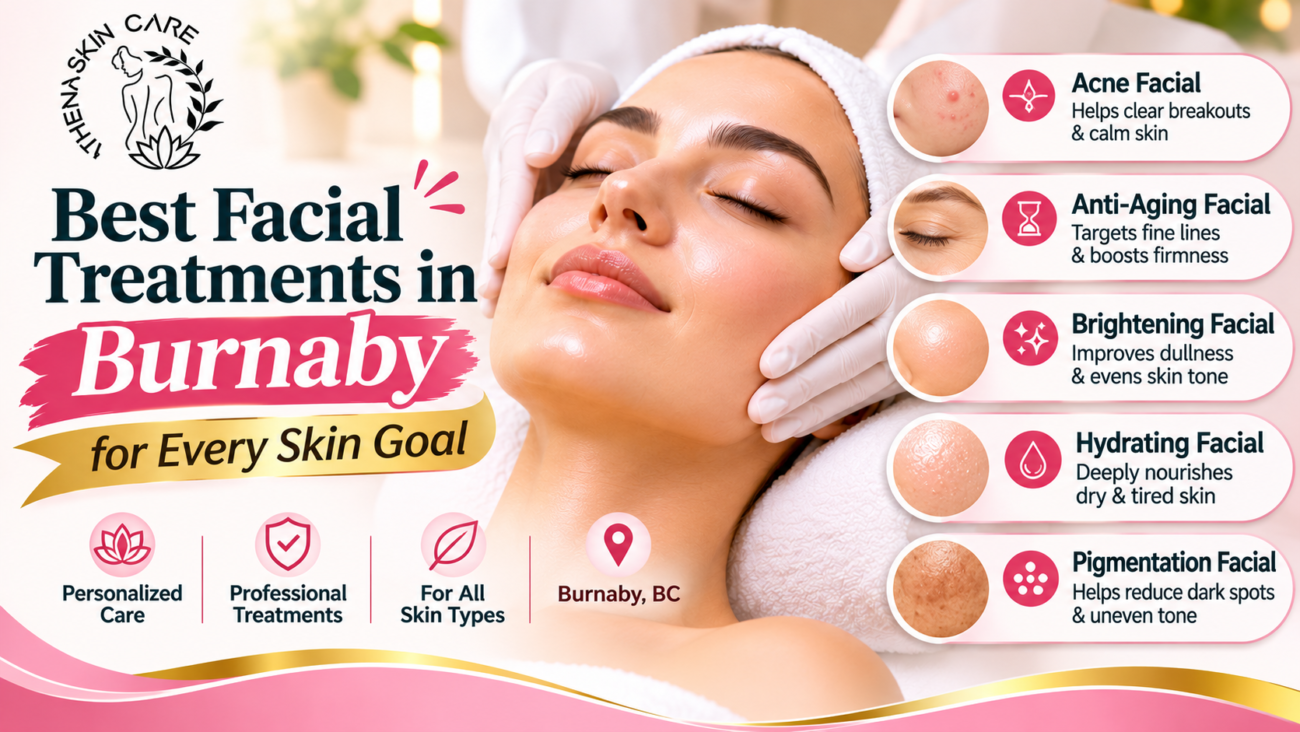
At Athena Skin Care on Hastings Street in Burnaby, facials are planned after an individual consultation. The clinic’s menu covers acne, anti-aging, pigmentation, glow and brightening facials and dermaplaning, so the consultation is where the therapist helps you identify your skin type and match it to the right option.
Common Mistakes When You Identify Your Skin Type
- Testing straight after a hot shower. Heat and water change how skin feels for a while.
- Mixing up dry and dehydrated skin. Oily skin can still feel tight if it lacks water.
- Judging by breakouts alone. Dry and sensitive skin can break out too, often from the wrong products.
- Testing once and never again. Skin changes with age, seasons and hormones, so identify your skin type again every few months.
- Copying a friend’s routine. Their facial may be perfect for them and wrong for you. Always identify your skin type for yourself.
How Skin Type Changes With the Seasons in Burnaby
Burnaby’s damp, mild winters and indoor heating can leave skin drier than it is in summer. Many people find their combination skin leans dry from November to March and oilier during warm months. It is a good idea to identify your skin type again at the start of each season and tell your therapist if anything has shifted.
| Season | Common change | Facial adjustment |
|---|---|---|
| Winter | Drier cheeks, tightness from indoor heating | More hydration, gentler exfoliation |
| Spring | Skin recovering, some dullness | Brightening facial |
| Summer | More oil and shine, more sun exposure | Deep cleansing, lighter products, daily SPF |
| Autumn | Pigmentation from summer sun shows | Pigmentation facial or light peel series |
People Also Ask
How do I identify my skin type at home?
The easiest way to identify your skin type is the bare-face method. Wash with a mild cleanser, apply nothing, wait 30 minutes, then check for shine, tightness or redness.
What are the five skin types?
The five main skin types are normal, oily, dry, combination and sensitive. Sensitivity can also appear alongside any of the other four.
Can my skin type change over time?
Yes. Age, hormones, climate, medication and pregnancy can all shift oil levels. It is worth taking time to identify your skin type again every few months.
Is combination skin the most common type?
Combination skin is very common, especially with an oily T-zone and normal or dry cheeks. If you identify your skin type as combination, you are in good company.
Frequently Asked Questions
How long should I wait before checking my skin?
Wait about 30 minutes after cleansing. This gives your skin time to return to its natural oil level so you can identify your skin type accurately.
What is the difference between dry and dehydrated skin?
Dry skin lacks oil and is a skin type. Dehydrated skin lacks water and is a temporary condition. Oily skin can be dehydrated, which is why it is important to identify your skin type and your skin condition separately.
Which facial is best if you cannot identify your skin type with confidence?
Book a consultation first, or choose a gentle glow facial. A therapist can help you identify your skin type during the visit and adjust the treatment.
Can you identify your skin type with a selfie or app?
Apps and photos can give hints, but lighting and filters affect results. A bare-face test or professional analysis is more reliable.
How often should I get a facial?
Many people book a facial every four to six weeks, roughly in line with the skin’s renewal cycle. Your therapist may suggest a different schedule based on your concerns.
Should men identify their skin type before a facial?
Yes. Men can use the same bare-face test. Shaving can make skin more sensitive, and many men have oily or combination skin. Knowing your type helps the therapist choose the right products.
Can sensitive skin get a facial?
Yes. Once you identify your skin type as sensitive, ask for a gentle, calming facial, a patch test for new products, and no strong scrubs or heat.
Final Thoughts — Identify Your Skin Type
You do not need to be a skin expert to choose the right facial. You only need to identify your skin type, understand what it needs, and share that with your therapist. A simple bare-face test, a blotting sheet and a few days of observation will help you identify your skin type with real confidence.
If you would like help, book a consultation with Athena Skin Care at 4317 Hastings St, Burnaby, BC V5C 2J7, or call (604) 779-6457. Bring the notes you made when you set out to identify your skin type, plus your current product list, and leave with a facial plan matched to your skin.
Disclaimer: This article is for general education and is not medical advice. See a doctor for persistent rashes, severe acne or any skin change that worries you.