


Table of Contents
Acne can be frustrating at any age. You may notice occasional pimples before an important event, recurring breakouts around the cheeks or jawline, blackheads and clogged pores, or persistent acne-prone skin that seems difficult to manage.
If you are searching for Acne Treatment Burnaby, the first step is understanding that acne is not exactly the same for everyone. Different people can have different types of breakouts, skin sensitivities, triggers and skincare needs. Because of this, a skincare routine or treatment that works well for one person may not be appropriate for another.
At Athena Skin Care in Burnaby, professional skincare treatments can be customised according to your skin type, concerns and individual skincare goals. The clinic’s facial treatment information specifically describes an acne facial in Burnaby for people dealing with acne, breakouts, blackheads, clogged pores and acne-prone skin.
This guide explains acne, common causes of breakouts, professional acne facials, daily skincare habits, when to consider professional medical advice and how to choose an acne-focused skincare service in Burnaby.
Important: This article is for general skincare information and is not a diagnosis or substitute for medical care. Deep, painful, severe or scarring acne may require assessment and treatment by a qualified healthcare professional or dermatologist.
What Is Acne?
Acne is a common skin condition that can appear as blackheads, whiteheads, pimples, cysts or nodules. Acne develops when hair follicles become clogged and inflammation occurs.
The American Academy of Dermatology notes that acne can have several forms, including blackheads, whiteheads, pimples and deeper painful cysts or nodules.
Acne can occur on different areas of the body, including:
- Face
- Forehead
- Nose
- Chin
- Cheeks
- Jawline
- Chest
- Back
- Shoulders
For many people, acne is more than an occasional pimple. Repeated breakouts can affect confidence and make people feel uncomfortable about their appearance.
The good news is that acne-prone skin can be managed with an appropriate skincare routine and, when necessary, professional or medical treatment.
Why Does Acne Happen?
Acne can develop for several reasons, and there isn’t always one single cause.
Some common factors include:
Excess Oil
Sebum, or natural skin oil, helps protect the skin. However, excess oil can contribute to clogged pores when combined with dead skin cells and other debris.
Clogged Pores
Dead skin cells and oil can accumulate inside hair follicles. This may contribute to blackheads, whiteheads and other forms of acne.
Inflammation
Inflammation plays an important role in many acne breakouts, particularly red and swollen pimples.
Hormonal Changes
Hormonal changes can influence oil production and acne. This is one reason acne can occur during puberty and may continue or appear during adulthood.
Skin and Hair Products
Some cosmetic, skincare and hair products may contribute to clogged pores in people who are acne-prone.
Picking or Squeezing
It can be tempting to squeeze a pimple, especially when it is visible. However, picking or squeezing can increase irritation and may increase the risk of marks and scarring. The American Academy of Dermatology specifically recommends avoiding this habit.
What Are the Different Types of Acne?
Understanding the type of breakout you are experiencing can help you understand why a personalised approach matters.
1. Blackheads
Blackheads are open clogged pores that appear dark on the surface.
The dark colour isn’t necessarily dirt. It can result from the contents of the pore reacting with air.
2. Whiteheads
Whiteheads occur when a clogged pore remains closed at the surface.
They can look like small white or skin-coloured bumps.
3. Papules
Papules are small, raised and inflamed bumps.
They may appear red or irritated and can be sensitive to touch.
4. Pustules
Pustules are inflamed spots that contain visible pus.
They are commonly referred to as pimples.
5. Nodules and Cysts
Deep, painful breakouts can be more serious and may have a higher risk of scarring.
If you have persistent deep or painful acne, professional medical assessment may be appropriate rather than relying only on cosmetic skincare.
The AAD notes that people with large, painful pimples deep in the skin or acne that leaves scars should see a dermatologist because over-the-counter products may not adequately treat these forms of acne.
Acne Treatment Burnaby: What Options Are Available?
When searching for Acne Treatment Burnaby, you may find several different types of services.
These can broadly include:
- Daily skincare
- Over-the-counter acne products
- Professional acne facials
- Skin consultations
- Prescription acne treatment
- Dermatological treatment
- Procedures used in selected cases
- Treatments focused on acne marks or pigmentation
The appropriate option depends on your individual skin condition.
A professional skincare service and medical acne treatment are not necessarily the same thing.
For example, a professional acne facial may focus on cleansing, removing impurities and supporting healthier-looking skin, while prescription acne treatment is designed to address specific medical aspects of acne.
What Is an Acne Facial?
An acne facial is a professional skincare treatment designed around acne-prone or congested skin.
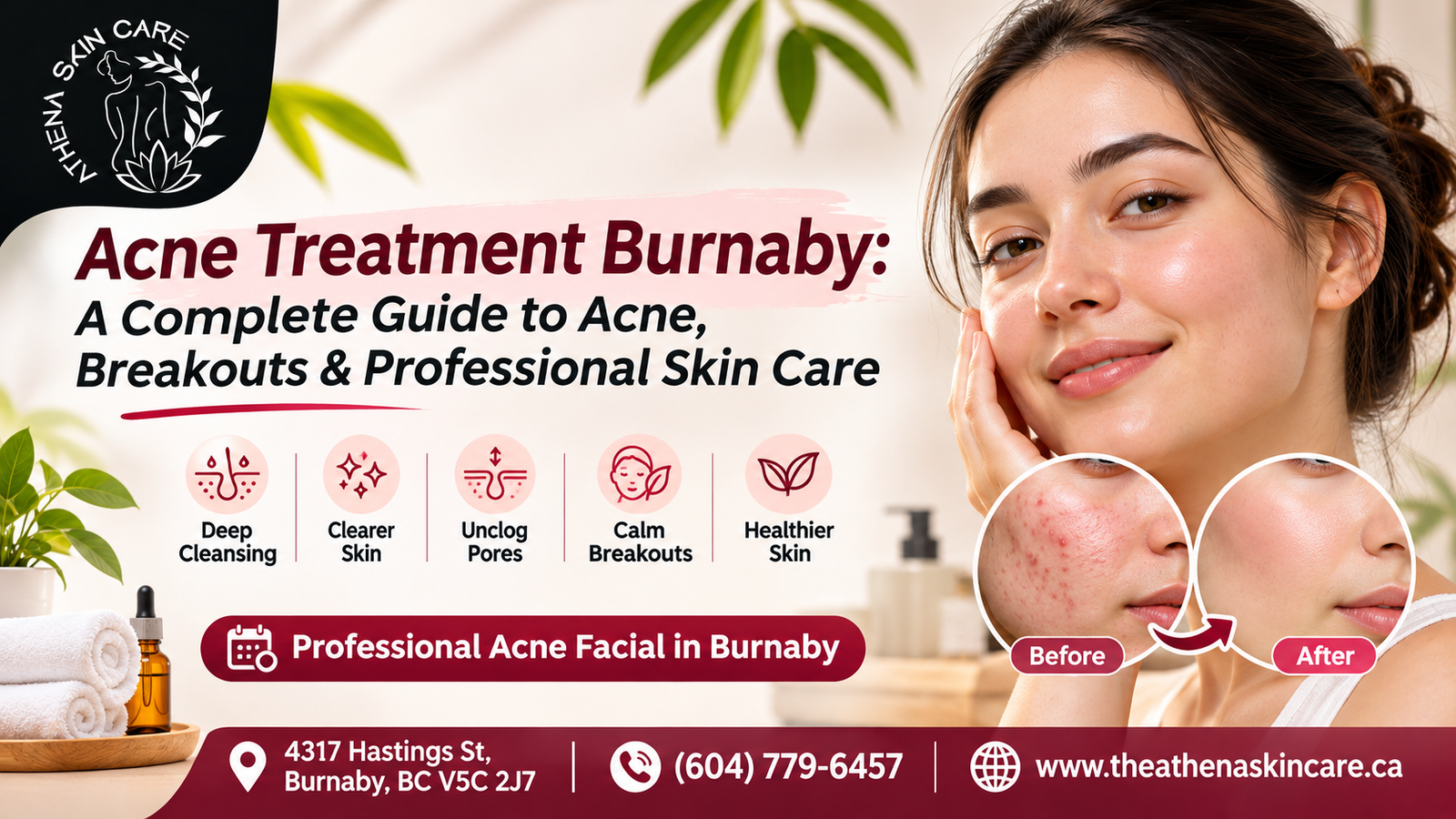
At Athena Skin Care, the acne facial in Burnaby is described as a treatment for people experiencing acne, breakouts, blackheads, clogged pores or acne-prone skin. The treatment focuses on thorough cleansing, removing impurities, cleansing pores and supporting clearer-looking, healthier skin.
A professional acne facial may be considered when your main concerns include:
- Congested pores
- Blackheads
- Occasional breakouts
- Oily skin
- Surface impurities
- Acne-prone skin
- Dull-looking skin associated with congestion
However, the treatment should be selected according to your skin’s condition rather than simply choosing the strongest available facial.
Why Choose a Customised Acne Facial?
Not everyone’s skin reacts in the same way.
Someone with oily and congested skin may have different needs from someone with dry, sensitive and acne-prone skin.
Athena Skin Care states that its facial treatments are customised according to skin type, concerns and individual skincare goals.
A customised approach can help avoid a common mistake: assuming that stronger treatment always means better treatment.
Your skincare professional can consider factors such as:
- Skin type
- Current breakouts
- Sensitivity
- Congestion
- Dryness
- Oiliness
- Existing skincare routine
- Your skincare goals
Acne Treatment Burnaby for Different Skin Types
Acne-Prone Oily Skin
Oily skin can be more prone to visible congestion and clogged pores.
A suitable routine should focus on cleansing without excessively stripping the skin.
Over-cleansing or aggressive scrubbing isn’t necessarily better.
The AAD recommends gently cleansing the skin up to twice daily and after sweating, using a gentle, non-abrasive cleanser.
Dry Acne-Prone Skin
People sometimes assume acne only occurs on oily skin.
That’s not true.
Acne-prone skin can also become dry or irritated, particularly when using certain acne products.
Moisturising can actually be useful during acne care because some acne treatments can cause dryness and irritation.
Choose products appropriate for acne-prone skin and follow professional or product instructions.
Sensitive Acne-Prone Skin
Sensitive skin may react more easily to aggressive exfoliation, scrubbing or multiple active ingredients.
If your skin becomes persistently irritated, burning or uncomfortable, simplify your routine and seek professional advice.
Combination Skin
Combination skin can have oily areas and drier areas simultaneously.
This makes a personalised skincare routine particularly useful.
Daily Skin Care Tips for Acne-Prone Skin
Professional treatments can be helpful, but your everyday skincare habits matter too.
Cleanse Gently
Wash your face gently rather than aggressively scrubbing.
The AAD recommends a gentle, non-abrasive cleanser and advises applying it with your fingertips rather than using rough tools that may irritate the skin.
Avoid Over-Scrubbing
Scrubbing acne aggressively can irritate your skin.
More friction doesn’t necessarily mean cleaner pores.
Choose Suitable Products
Look for skincare and makeup products labelled non-comedogenic, meaning they are designed not to clog pores.
The NHS also recommends non-comedogenic skincare and makeup for people with acne.
Don’t Pick Your Pimples
Picking, squeezing and popping spots can increase irritation and may increase the chance of marks and scars.
Keep Your Hair Clean
Oil from hair can contribute to breakouts around the forehead for some people.
If you have oily hair, regular shampooing and keeping hair away from the face may help.
Protect Your Skin From the Sun
Sun exposure can contribute to skin damage, and some acne treatments can increase sensitivity to sunlight.
The AAD recommends broad-spectrum, water-resistant sunscreen with SPF 30 or higher for exposed skin.
What Ingredients Are Commonly Used for Acne?
If you are researching Acne Treatment Burnaby, you’ll likely encounter several acne-related skincare ingredients.
Some commonly used ingredients include:
Salicylic Acid
Salicylic acid can help unclog pores and exfoliate the skin. The AAD includes salicylic acid among acne treatments that may be useful for certain people.
Benzoyl Peroxide
Benzoyl peroxide is commonly used in acne treatment and can reduce acne-causing bacteria on the skin.
Retinoids
Topical retinoids can help unclog pores and are commonly used in acne treatment.
Azelaic Acid
Azelaic acid can help with acne and may also help with dark spots left after acne clears.
However, choosing active ingredients should depend on your skin and the type of acne you have.
If you have persistent or severe acne, professional medical advice is more appropriate than continuously experimenting with different products.
Can an Acne Facial Remove Acne Permanently?
It’s important to have realistic expectations.
An acne facial can support skin cleansing and improve the appearance and feel of congested or acne-prone skin, but no single facial should be presented as a permanent cure for acne.
Acne can have multiple contributing factors, and ongoing management may be required.
The American Academy of Dermatology explains that acne treatment is individualised and that different types of acne may require different approaches.
For this reason, a professional skincare consultation can be useful when deciding what type of service is appropriate for your skin.
How Long Does Acne Treatment Take to Work?
This is one of the most common questions people ask.
The answer depends on the treatment.
Some professional skincare treatments may make your skin feel cleaner or refreshed after a session, while acne medication and long-term acne management generally require more time.
The AAD notes that people often need 6 to 8 weeks before seeing fewer breakouts with an acne treatment plan.
This is why constantly changing products every few days may not be helpful.
Consistency matters.
If a treatment causes significant irritation or your acne continues to worsen, consult an appropriate healthcare professional.
Acne and Acne Scars Are Not the Same Thing
It’s important to distinguish active acne from acne scarring.
Active Acne
This includes current:
- Pimples
- Blackheads
- Whiteheads
- Inflamed breakouts
- Deep acne
Post-Acne Marks
These are dark or red marks that can remain after a pimple has healed.
Acne Scars
Scarring involves changes in the texture or structure of the skin.
These concerns may require different approaches.
If scarring is significant, a dermatologist can assess the type of scar and recommend appropriate treatment options.
Can Acne Treatment Help With Dark Spots?
Some people notice dark spots after acne clears.
These marks are commonly called post-inflammatory hyperpigmentation.
Certain acne treatments, including azelaic acid and retinoids, may help with acne and associated dark spots, depending on the individual’s situation.
However, treatment should be chosen carefully, especially if your skin is sensitive or easily irritated.
Sun protection is also important because UV exposure can worsen some forms of pigmentation.
Acne Treatment Burnaby: When Should You See a Dermatologist?
A professional facial may be appropriate for some skincare concerns, but there are situations where you should seek medical advice.
Consider seeing a doctor or dermatologist if you have:
- Deep painful acne
- Severe or widespread acne
- Acne that is leaving scars
- Acne that is not improving
- Significant inflammation
- Suspected skin infection
- Acne that is affecting your mental wellbeing
The NHS recommends seeking medical help when acne doesn’t improve with self-care, when spots are deep or painful, when scarring occurs, or when acne is affecting mental health.
This distinction is important when searching for Acne Treatment Burnaby. A skincare clinic can provide professional skincare services, but medical acne conditions may require a dermatologist or physician.
Is Professional Acne Facial Suitable for Teenagers?
Teenagers commonly experience acne because hormonal changes can influence oil production and breakouts.
However, treatment should be selected based on the individual’s age, skin condition and sensitivity.
Parents or guardians may want to discuss the appropriate skincare approach with a qualified professional, especially when acne is persistent, painful or causing scars.
For moderate or severe acne, medical assessment may be appropriate.
Acne Treatment Burnaby for Adults
Adult acne can be frustrating because many people assume acne should disappear after adolescence.
However, acne can occur or continue during adulthood.
Adult acne may appear around areas such as:
- Chin
- Jawline
- Cheeks
- Forehead
Hormonal changes can play a role, but other factors may also contribute.
If adult acne is persistent, a professional assessment can help determine whether you need skincare support, over-the-counter treatment or medical acne care.
Common Acne Skincare Mistakes to Avoid
Using Too Many Products
Adding multiple active ingredients simultaneously can irritate your skin.
Start with a manageable routine.
Scrubbing Aggressively
Acne isn’t caused by dirt that needs to be scrubbed away.
Aggressive scrubbing can irritate the skin.
Popping Pimples
This can increase inflammation and may increase the risk of marks and scarring.
Changing Products Too Frequently
Acne treatments often require time to work.
The AAD recommends giving an acne treatment time rather than constantly switching products.
Ignoring Moisturiser
Acne-prone skin can still become dry.
The right moisturiser may help improve tolerance when using acne treatments that cause dryness or irritation.
Skipping Sunscreen
Sun protection should remain part of a sensible skincare routine.
How to Choose an Acne Treatment Clinic in Burnaby
If you’re searching for Acne Treatment Burnaby, don’t choose a service based only on promotional claims.
Consider the following:
1. Does the clinic offer personalised skincare?
Your skin should be considered individually rather than treated exactly like everyone else’s.
2. Does the clinic explain the treatment?
You should understand what the treatment is designed to do.
3. Is the service appropriate for your concern?
A facial may be suitable for certain skincare concerns, while severe acne may require medical treatment.
4. Does the clinic provide clear contact information?
A reputable business should make it easy for clients to ask questions and book appointments.
5. Does the clinic offer other skin services?
A clinic offering multiple skincare services may be able to discuss broader skincare concerns, depending on its scope of practice.
Why Choose Athena Skin Care for Acne Facial in Burnaby?
Athena Skin Care is located at:
4317 Hastings St, Burnaby, BC V5C 2J7, Canada
The clinic offers a range of skincare and beauty services, including facials, laser hair removal, RF microneedling, acne and pigmentation treatments, anti-aging services, waxing and threading and other beauty treatments.
Its facial treatment service includes an acne facial in Burnaby designed for concerns such as acne, breakouts, blackheads, clogged pores and acne-prone skin. The treatment is described as being customised according to skin needs.
If you’re unsure whether an acne facial is appropriate for your skin, you can contact the clinic and discuss your concerns before booking.
Athena Skin Care Contact Details
Address: 4317 Hastings St, Burnaby, BC V5C 2J7
Phone: (604) 779-6457
Website: Athena Skin Care
Contact: Contact Athena Skin Care
Frequently Asked Questions About Acne Treatment Burnaby
1. What is the best acne treatment in Burnaby?
The best approach depends on your acne type, severity, skin sensitivity and goals. Professional acne facials may be suitable for some acne-prone and congested skin concerns, while persistent, deep or scarring acne may require medical treatment.
2. Does Athena Skin Care offer acne treatment in Burnaby?
Athena Skin Care offers an acne facial in Burnaby for acne, breakouts, blackheads, clogged pores and acne-prone skin. The treatment is described as being customised according to individual skin needs.
3. What is an acne facial?
An acne facial is a professional skincare treatment focused on cleansing and caring for acne-prone or congested skin. At Athena Skin Care, the acne facial focuses on thorough cleansing, removing impurities and cleansing pores.
4. How often should I get an acne facial?
There isn’t one schedule that works for everyone. Frequency depends on your skin condition, treatment type and skincare routine. A professional can recommend a schedule based on your individual needs.
5. Can an acne facial remove blackheads?
Professional facial treatments may help address surface impurities and clogged pores. However, persistent or severe acne should be evaluated appropriately rather than relying solely on facials.
6. Can acne treatment help with acne marks?
Some acne treatments can also help with dark marks left after acne. However, active acne and pigmentation are different concerns and may require different treatment approaches.
7. Should I squeeze pimples before an acne facial?
It is generally better not to squeeze or pick acne. Picking can increase irritation and may increase the risk of scarring and dark marks.
8. Can teenagers get acne treatment?
Teenagers commonly experience acne. The appropriate treatment depends on age, acne severity and skin condition. Persistent, painful or scarring acne should be discussed with a healthcare professional.
9. When should I see a dermatologist for acne?
Consider medical advice if you have deep or painful acne, significant scarring, persistent breakouts, suspected infection or acne that is affecting your mental health.
10. Is acne caused by poor hygiene?
Acne is more complicated than simply having dirty skin. Excess oil, clogged follicles, inflammation, hormones and other factors can contribute to acne. Aggressive washing and scrubbing can actually irritate the skin.
11. Can moisturiser be used on acne-prone skin?
Yes. Moisturiser can be useful for acne-prone skin, particularly when acne treatments cause dryness or irritation. Look for products appropriate for acne-prone skin and preferably non-comedogenic formulations.
12. How long does acne treatment take?
It depends on the treatment and severity of acne. Some acne treatment plans require several weeks before noticeable improvement. The AAD notes that people may need at least 6–8 weeks to see fewer breakouts from an acne treatment plan.
Final Thoughts: Finding the Right Acne Treatment in Burnaby
Finding the right Acne Treatment Burnaby option starts with understanding your skin.
If you are dealing with occasional breakouts, blackheads, clogged pores or acne-prone skin, a professional acne facial may be one option to consider as part of your skincare routine.
At the same time, severe, painful, persistent or scarring acne should not be treated as simply a cosmetic concern. Medical acne treatments are available, and a dermatologist or other qualified healthcare professional can determine whether prescription treatment is appropriate.
The most important goal is not to find the strongest treatment. It is to find an approach that is appropriate for your skin and your specific concern.
For professional skincare support in Burnaby, Athena Skin Care offers customised facial treatments, including an acne facial designed around acne-prone and congested skin concerns.
Ready to discuss your skin concerns?
Contact Athena Skin Care at (604) 779-6457 or visit the clinic at 4317 Hastings St, Burnaby, BC V5C 2J7.
Individual results and treatment suitability can vary. This article provides general skincare information and does not replace diagnosis or medical advice from a qualified healthcare professional.