

Table of Contents
Quick Answer – Acne Scar Treatment Burnaby
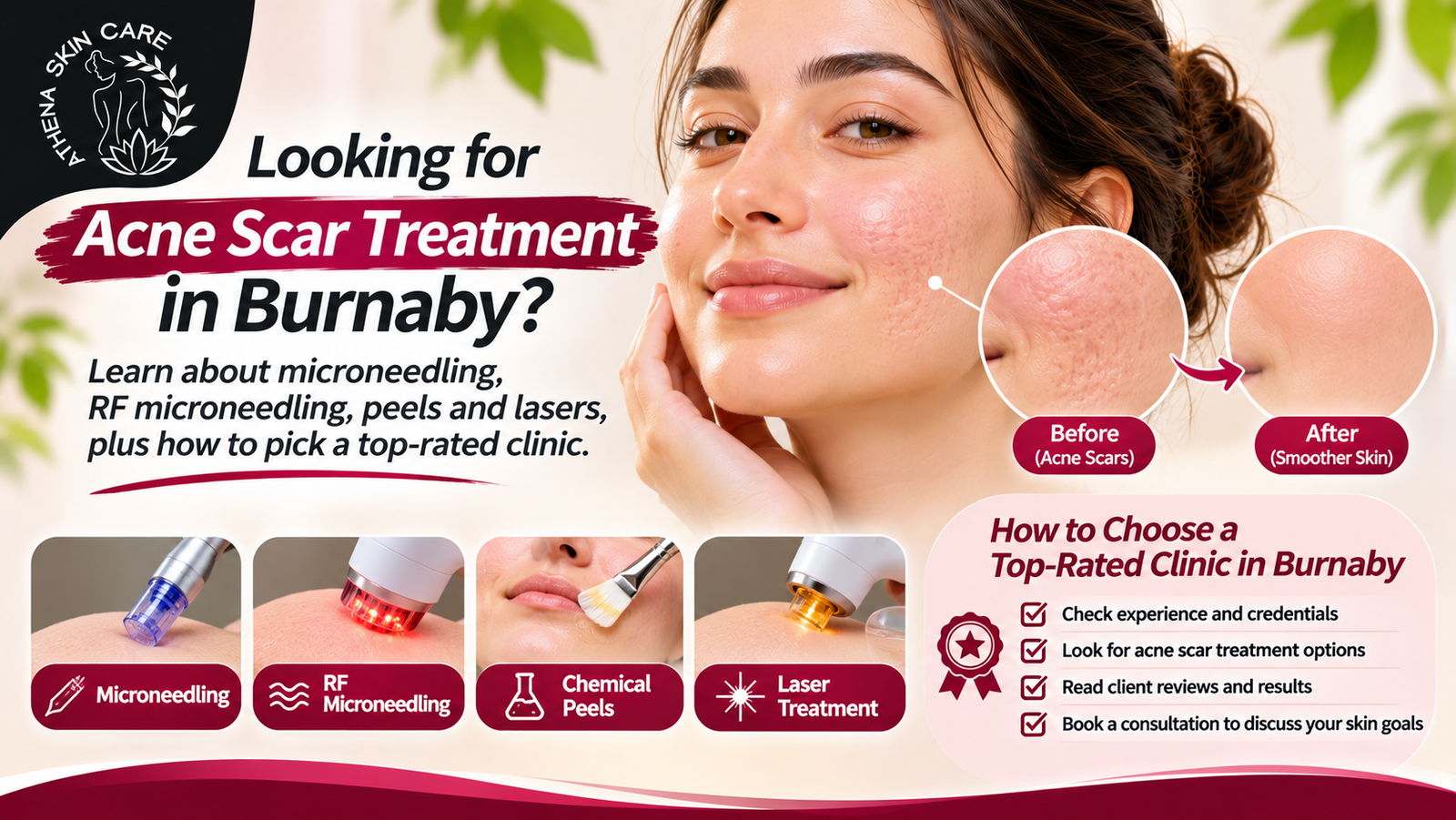
The best acne scar clinic Burnaby is one that identifies your scar type first, offers more than one treatment, has trained staff, shows real before-and-after results, and has steady, genuine reviews. For most people, acne scar treatment Burnaby clinics offer means microneedling, RF microneedling, peels or lasers, usually in a series of three to six visits.
Introduction
Acne usually fades. The marks it leaves behind often don’t. If you’ve spent years looking at pitted cheeks, dark spots on your jawline, or uneven texture that makeup can’t hide, you’re probably searching for acne scar treatment Burnaby residents can trust. There are plenty of choices, from small spas to medical clinics, and that makes it hard to know who is actually good at this.
This guide is written to help you sort it out. It explains the types of acne scars, how the main treatments work, what results to expect, and how to judge top-rated facial clinics Burnaby has to offer without relying on a star rating alone. It also covers cost, safety, aftercare, and the questions to ask before you book.
Treating acne scars is slow work. No single facial erases them, and anyone who promises a one-visit fix isn’t being honest. But with the right plan, most people see real improvement in texture and tone.
What Makes a Facial Clinic Top-Rated for Acne Scars?
A top-rated acne scar clinic combines trained staff, a clear assessment process, proven technology, honest expectations and consistent reviews over time. A high Google score helps, but it should be one factor, not the only one.
When you compare a facial clinic Burnaby has available, look for these signs:
- A real assessment. The provider should look closely at your skin, ask about your acne history, and tell you which scar types you have before recommending anything.
- Several treatment options. A clinic that only offers one machine will tend to recommend that machine for everyone.
- Training and credentials. Ask who performs the treatment, what training they have, and whether a nurse or physician is involved in procedures that go beyond the surface of the skin.
- Real results. Before-and-after photos should look consistent, use the same lighting, and show your skin tone or something close to it.
- Reviews that mention acne scars. Search the reviews for the words “acne scars” or “texture.” Generic praise about a friendly front desk tells you little about results.
- Honest timelines. Good providers talk about improvement, not perfection, and tell you how many visits you may need.
- Clean, professional setup. Single-use tips, sanitized rooms and proper consent forms are basic.
- Follow-up care. Aftercare instructions and a way to contact the clinic if something looks wrong.
If a clinic checks most of these boxes, it’s worth a consultation, even if it has fewer reviews than a bigger competitor.
What Types of Acne Scars Do You Have?
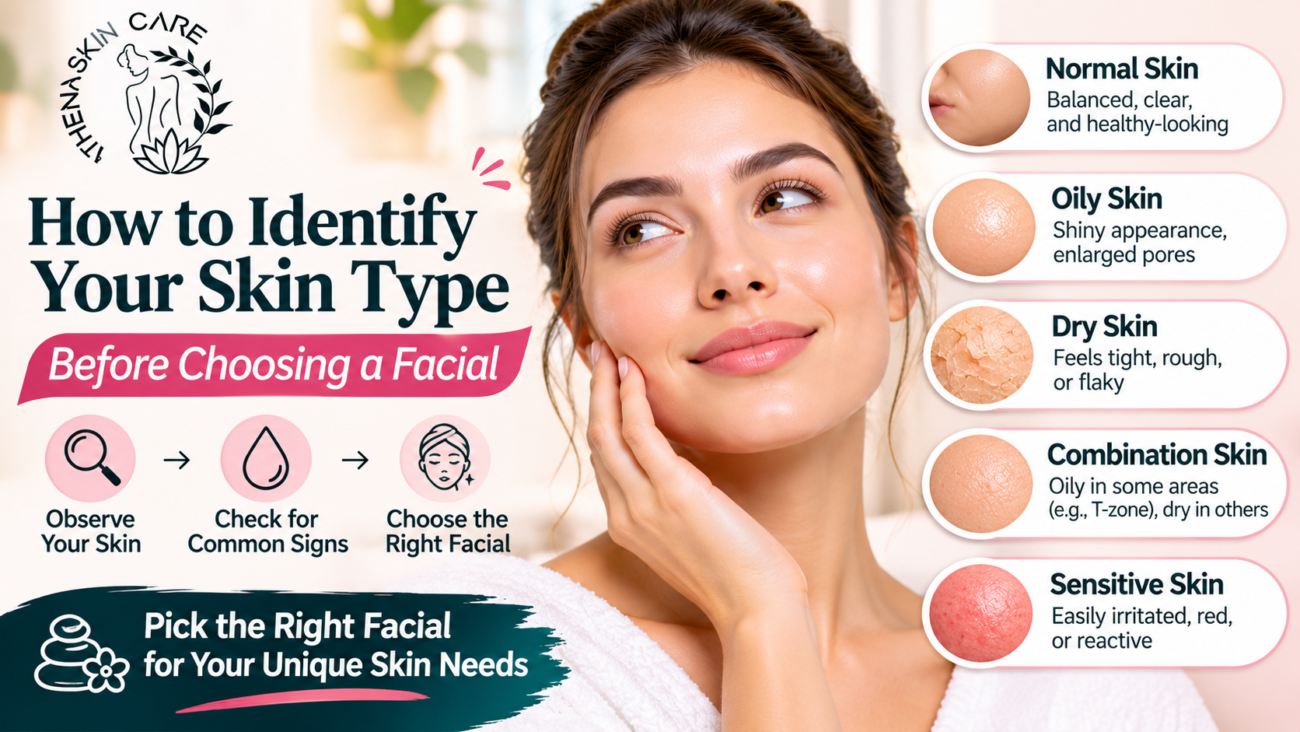
Acne scars fall into a few groups: ice pick scars (narrow and deep), boxcar scars (wide with sharp edges), rolling scars (broad and wavy), and raised scars. Flat red or brown spots are usually post-acne marks, not true scars, and they respond to different treatments.
Knowing your type matters because treatments work differently on each.
- Ice pick scars are small, narrow holes that go deep into the skin. They’re the hardest to treat with surface methods and often need targeted procedures.
- Boxcar scars are round or oval dips with defined edges, common on the cheeks and temples. They respond well to resurfacing and collagen-building treatments.
- Rolling scars look like gentle waves under the skin, caused by fibrous bands pulling the skin down. They often improve with a combination of treatments.
- Raised or hypertrophic scars stand above the skin. They’re more common on the chest, back and jawline and need a different approach.
Then there are post-acne marks. These are flat discolourations left after a pimple heals. Red or pink marks are a sign of leftover inflammation or small blood vessels. Brown marks are called post-inflammatory hyperpigmentation, and they appear when skin overproduces pigment after being irritated. Both can fade with time, daily sunscreen and the right products, and neither is a true scar.
Most people have a mix of types, which is why a single treatment rarely does the whole job.
What Is the Best Acne Scar Treatment?
There isn’t one best acne scar treatment for everyone. The right option depends on your scar type, your skin tone, how much downtime you can handle, and your budget. Microneedling and RF microneedling suit many people. Peels help marks and shallow scars. Lasers are stronger and need more recovery time.
Here is a quick comparison.
- Microneedling: Good for mild to moderate boxcar and rolling scars and overall texture. Low downtime.
- RF microneedling: Adds heat to the needling for deeper collagen stimulation. Often used for moderate scarring. Short downtime.
- Chemical peels: Best for post-acne marks and shallow scars. Stronger peels need more downtime.
- Laser resurfacing: Targets deeper scars and uneven texture. More downtime and a higher need for an experienced provider.
- Subcision, TCA CROSS and fillers: Medical procedures for specific scar types, performed by trained doctors or nurses.
A good provider will often combine two or three of these over several months rather than rely on one.
Does Microneedling for Acne Scars Work?
Yes. Microneedling for acne scars works by creating tiny controlled injuries that trigger the skin to make new collagen. It can soften shallow to moderate scars and improve texture, usually over a series of sessions. It won’t erase deep ice pick scars on its own.
Microneedling is also called collagen induction therapy. A device with fine needles makes thousands of tiny channels in the skin. Your body responds by repairing the area and producing fresh collagen, which gradually fills out dips and smooths texture.
What to expect:
- During treatment: Numbing cream is usually applied first. Most people describe pressure and some stinging.
- Right after: Redness similar to a mild sunburn, lasting one to three days. Skin may feel tight or dry.
- Results: Texture often starts to look better after the second or third session, with continued improvement for several months as collagen rebuilds.
It isn’t a quick fix, and it isn’t for active, inflamed acne.
What Is RF Microneedling, and Is It Better?
RF microneedling combines tiny needles with radiofrequency heat delivered into the skin. The added heat can stimulate more collagen and tighten tissue. Many providers use it for moderate scarring, though it isn’t automatically better for everyone.
If you’re searching for RF microneedling Burnaby clinics offer, ask which device they use, how deep it treats, and how many sessions they recommend. Compared with standard microneedling, radiofrequency versions can reach deeper layers and may help skin firmness at the same time. They also cost more per session, and heat settings matter, especially on darker skin tones.
A good provider will explain why they chose RF over standard needling for your skin, not just push the more expensive option.
Can Chemical Peels for Acne Scars Help?
Chemical peels for acne scars help most with post-acne marks, rough texture and shallow scars. They work by removing damaged outer layers so smoother skin can grow. Light peels need little downtime, while deeper peels need more recovery and should be done by trained professionals.
Peels use acids such as glycolic, salicylic, lactic or TCA at different strengths. A few points to know:
- Light peels are good for fading brown marks and improving dullness.
- Medium-depth peels can improve shallow scars but cause visible peeling for several days.
- Peels alone rarely fix deep ice pick scars.
- Sun protection afterwards is essential, because fresh skin burns and darkens easily.
Peels work well as part of a plan. For example, microneedling for texture, with a peel to even out colour.
Is Laser Resurfacing for Acne Scars Worth It?
Laser resurfacing for acne scars can give strong results for deeper scarring and uneven texture, but it’s more intense than microneedling. Expect more downtime, higher cost and a greater need for an experienced provider, especially if you have medium to deep skin tones.
There are two broad types. Ablative lasers remove thin layers of skin and stimulate heavy collagen repair, with a week or more of healing. Non-ablative or fractional lasers heat deeper layers while leaving the surface mostly intact, with less downtime but gentler results.
Lasers can darken or lighten skin if the wrong settings are used. That risk is higher on darker skin. Before choosing a laser, ask the provider how many patients with your skin tone they’ve treated and whether they do a test patch.
What About Dermaplaning and HydraFacial?
Dermaplaning for acne scars gives only a small benefit. It removes dead skin and fine hair, so skin looks smoother and products absorb better, but it doesn’t rebuild collagen. A HydraFacial for acne helps with clogged pores and congestion, not deep scarring.
These are useful maintenance treatments. A hydrafacial for acne can clear pores and calm active breakouts, which helps prevent new scars. Dermaplaning can make texture look better on the day, and it prepares skin for other treatments.
But be wary of any clinic that sells these two as a cure for pitted scars. An acne scar facial that uses extraction, gentle exfoliation and hydration is a good supporting treatment. It’s the base layer of a plan, not the whole plan.
What Other Treatments Do Doctors Use?
For stubborn scars, doctors and nurses may use subcision for rolling scars, TCA CROSS for ice pick scars, dermal fillers for volume, or punch techniques for deep scars. These are medical procedures and should be done by qualified clinicians.
- Subcision: A needle releases the fibrous bands that pull rolling scars downward.
- TCA CROSS: A small amount of strong acid is placed inside narrow ice pick scars to stimulate repair.
- Dermal fillers: Temporary filler lifts depressed scars. Results last months, not years.
- Punch excision: A small surgical technique used for deep scars.
If your scars are deep, a consultation with a dermatologist or physician may be the best first step. A good skin clinic will tell you honestly when a case is beyond what facials and surface treatments can do, and refer you.
Acne Scar Treatment for Dark Skin: What to Know
Acne scar treatment for dark skin needs extra care because deeper skin tones are more likely to develop dark patches after heat, laser or irritation. Safer plans often start with gentle methods, use test patches, and choose settings suited to the skin tone.
People with medium to deep skin tones are more prone to post-inflammatory hyperpigmentation, which means a treatment that’s meant to help can sometimes leave new dark marks. That doesn’t mean treatment isn’t possible. It means the provider must have experience.
Questions worth asking:
- Have you treated my skin tone before, and can I see examples?
- Will you do a test patch first?
- Which settings or devices do you use to lower the risk of darkening?
- How will we manage pigment during and after the treatment series?
Daily sunscreen is non-negotiable. A single week of unprotected sun can undo months of progress.
How Many Sessions Will You Need?
How many sessions for acne scars depends on scar depth and treatment type. Microneedling and RF microneedling usually take three to six sessions, spaced four to six weeks apart. Peels are often done as a series of three to six. Deeper scars may need ongoing maintenance.
There’s no fixed number, because skin is different for each person. Collagen takes time to build, so the best improvement often shows three to six months after your final session. Mild scars may improve in a few visits. Deeper scars may need a longer plan and a mix of methods.
Be cautious if a clinic quotes a firm number of sessions without examining your skin first.
How Much Does Acne Scar Treatment Cost?
Acne scar treatment cost varies by method, clinic and the number of sessions. Facial-based treatments cost less per visit than lasers or RF devices, but a full plan usually involves several visits. Ask for a written quote that covers the whole series, not only the first session.
Several things affect price:
- The type of treatment and the device used
- The size of the area treated
- Who performs the treatment
- Whether you buy a package
- Add-on products such as numbing cream, serums and sunscreen
Packages often reduce the cost per session, but don’t pay for a large package before you’ve had a consultation and a first treatment. Compare quotes for the same treatment, and remember that the cheapest option isn’t a bargain if it’s done by someone without training.
Who Should Wait Before Treatment?
You should delay acne scar treatment if you have active infected acne, a recent sunburn, cold sores, or you’re pregnant. Tell your provider if you’ve taken isotretinoin, use blood thinners, or tend to form keloid scars, because these change what’s safe.
It’s common for providers to ask you to wait before certain treatments in these situations:
- Active, inflamed acne: Needling over infected pimples can spread bacteria.
- Isotretinoin (Accutane): Many providers and doctors ask patients to wait several months after stopping before skin resurfacing. Follow your prescriber’s advice.
- Pregnancy or breastfeeding: Some peels and devices aren’t recommended.
- Keloid or raised scar history: Needling and lasers can sometimes make these worse.
- Recent tanning or sunburn: Skin is too sensitive and more likely to pigment.
- Cold sores: Treatment can trigger an outbreak, so your provider may suggest preventive medication.
Be honest on your health form. It protects you.
How Do You Check Ratings and Find Acne Scar Treatment Near Me?
When you search acne scar treatment near me, check Google reviews, the clinic’s own before-and-after gallery, and its website for named treatments. Read reviews that mention scars, look for patterns over time, and trust a clinic more if it answers questions clearly.
Here’s a simple way to do it:
- Search Google Maps for “acne scar treatment Burnaby” and open three or four clinics.
- Read the newest reviews first, then the lowest ones. How the clinic responds to criticism says a lot.
- Filter reviews by words like “scar,” “texture” or “microneedling.”
- Look at the clinic’s website. Do they explain treatments in detail, or only list names?
- Call or message with one specific question. A clear, patient answer is a good sign.
- Book consultations with two clinics and compare the plans.
Be skeptical of reviews that all sound the same or were posted within a few days. A steady flow of detailed reviews over months is more believable than a sudden burst.
What Should You Ask at a Skin Consultation Burnaby?
At a skin consultation Burnaby clinics offer, ask what scar types you have, which treatments they suggest and why, how many sessions you may need, what recovery looks like, who does the treatment and what the total cost will be.
Bring a list of questions:
- What types of acne scars do I have?
- Which treatment do you recommend first, and why?
- What results are realistic for my skin?
- How many visits will I need, and how far apart?
- What is the downtime for each?
- Who will perform the treatment, and what training do they have?
- What are the risks for my skin tone?
- What is the full cost of the plan?
- What happens if I’m unhappy or have a reaction?
A good consultation shouldn’t feel like a sales pitch. If you feel pressured to buy a package on the spot, walk away.
Aftercare: How to Protect Your Results
Good aftercare means gentle cleansing, a simple moisturizer, daily broad-spectrum sunscreen, and no picking or harsh products for several days. Following your provider’s instructions closely helps healing and lowers the risk of pigment changes.
A basic aftercare routine includes:
- Use a gentle cleanser and a fragrance-free moisturizer.
- Apply sunscreen of SPF 30 or higher every morning and reapply outdoors.
- Avoid retinol, strong acids and scrubs until your provider says it’s fine.
- Skip hot showers, saunas and heavy workouts for a day or two.
- Don’t pick at flakes or scabs.
- Keep makeup light, using clean brushes, until the redness settles.
Contact your clinic if you see signs of infection, such as increasing pain, swelling, pus or fever.
Acne Scar Clinic Burnaby Heights: Athena Skin Care
Athena Skin Care is a skin care clinic Burnaby residents can visit at 4317 Hastings St Burnaby Heights. The clinic offers facials and skin treatments, including RF microneedling, and recommends a personal plan after assessing your skin.
If you’re looking for a Burnaby Heights skin clinic near Hastings Street Burnaby shops and transit, Athena is an option to include in your comparison. Book a consultation, ask the questions in this guide, and see whether the plan makes sense for your scars and your budget. A first visit should explain what’s realistic, which treatments suit your skin type, and what the process will cost.
Athena Skin Care
Address: 4317 Hastings St, Burnaby, BC V5C 2J7
Phone: (604) 779-6457
Website: theathenaskincare.ca
If your scars are deep or you’ve had a history of keloids, the team can discuss whether a referral to a physician or dermatologist is the safer next step.
Frequently Asked Questions About Acne Scar Treatment Burnaby
What is the best treatment for acne scars?
It depends on your scar type. Microneedling and RF microneedling work for many people, peels help with marks and shallow scars, and lasers suit deeper scarring. Most good plans combine two or more methods over several months.
Can acne scars be removed completely?
Not usually. Treatments can improve texture and tone a lot, but most scars don’t disappear fully. Be wary of any clinic that promises total removal. A good goal is smoother, less noticeable skin.
How long do acne scar treatments take to work?
You may see early changes after two or three sessions, but collagen keeps building for three to six months. Plan on a series of treatments and check progress with photos taken in the same lighting.
Is microneedling safe for acne scars?
For most people with healthy skin, yes, when done by trained staff with sterile, single-use tips. It isn’t suitable over active infected acne, and people with keloid scarring or certain medical conditions should check with a doctor first.
Does acne scar treatment hurt?
Most people feel pressure and mild stinging. Numbing cream helps. Deeper treatments like lasers or RF devices may feel hotter or sharper. Your provider should explain pain control before you start.
Can I have acne scar treatment if I have dark skin?
Yes, but you need a provider who has experience with deeper skin tones. Ask for a test patch, a gentle plan and strict sun protection to lower the risk of dark patches.
How do I know if a Burnaby clinic is good?
Look for staff training, a clear assessment, honest timelines, before-and-after photos, and reviews that mention scars. Book a consultation and see whether the provider explains options clearly and without pressure.
Where can I get professional acne scar treatment Burnaby?
Athena Skin Care, at 4317 Hastings St, Burnaby, BC V5C 2J7, offers professional acne scar treatment options Burnaby Heights. Call (604) 779-6457 or visit theathenaskincare.ca to book a consultation.