


Table of Contents
If you have ever stood in front of a bathroom mirror, noticed a few dark hairs on your upper lip or chin, and wished for a quick fix, you are far from alone. Facial hair is a normal part of being human, and almost every woman has some. Some prefer to leave it alone. Others want a smoother look, and for them, face wax strips for women are one of the most popular facial hair removal methods available.
There is a reason for that popularity. Face wax strips for women are inexpensive, easy to find, and need no special equipment. You press, smooth and pull. Compared with shaving, the results last longer. Compared with a salon visit, the cost is much lower. But facial skin is thinner and more delicate than the skin on your legs, so the wrong product or technique can cause redness, breakouts, or even small burns.
This guide explains what face wax strips are, how they work, who should avoid them, how to choose the best face wax strips for your skin, and how to use them step by step. You will also find area-by-area tips, aftercare advice, common mistakes, and a clear explanation of when a professional is the safer choice.
What Are Face Wax Strips?
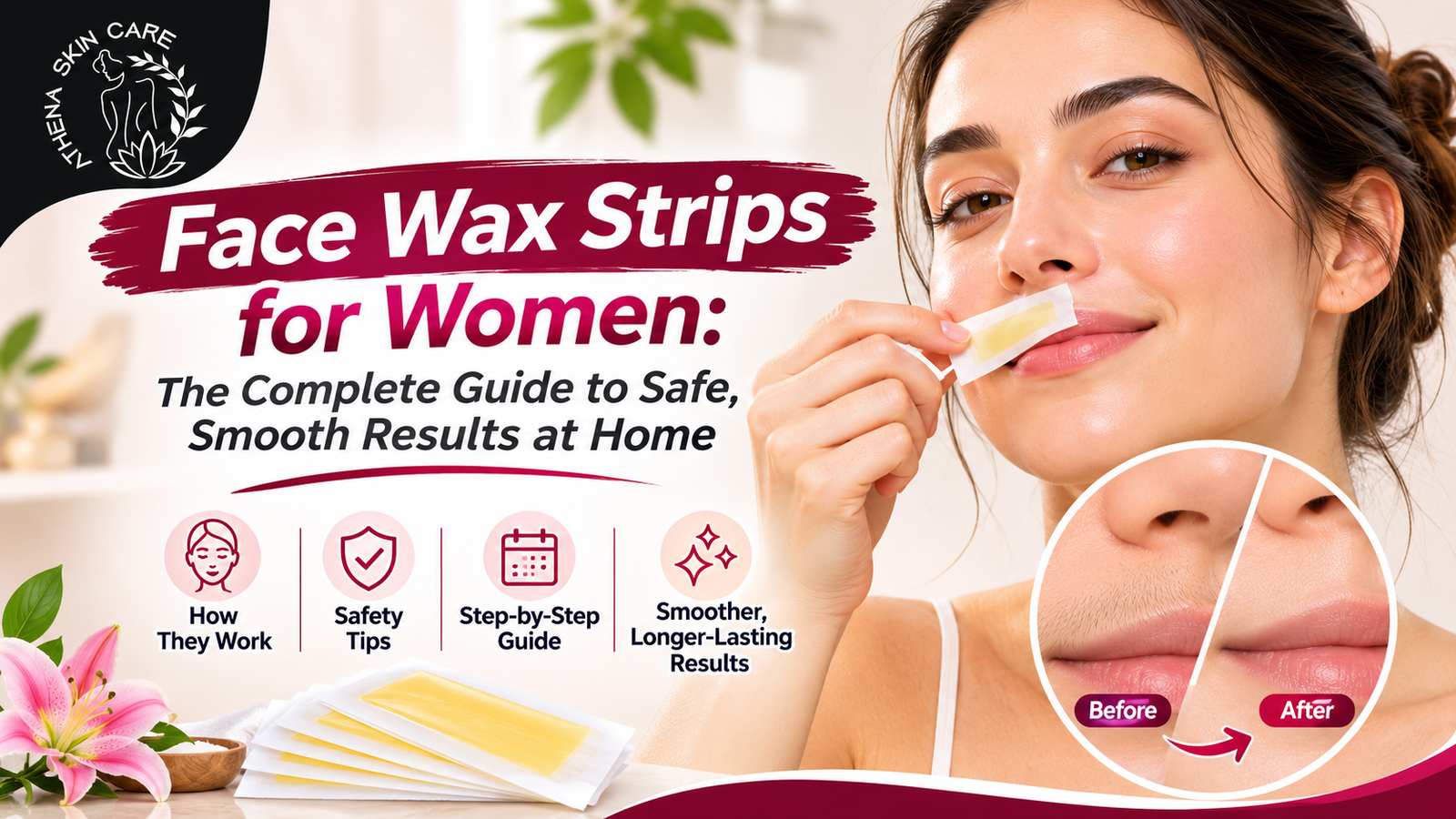
Facial wax strips are small, pre-cut pieces of cloth or paper that are already coated with a thin layer of wax. You press a strip onto the skin, rub it in the direction of hair growth, and pull it off against the direction of growth. The wax grips the hair, and the hair comes out from the root.
Face wax strips for women are different from the large leg and body strips in three ways:
- Size and shape. They are smaller, often shaped for the upper lip, chin, brows or cheeks.
- Wax formula. The wax is usually softer and grips finer hair without pulling the skin as hard.
- Added soothing ingredients. Many include calming extracts such as aloe or chamomile, and most come with a small wipe or oil to remove wax residue.
Most products fall into two groups. Cold wax strips work at room temperature. You warm them between your hands for a few seconds, peel them apart, and apply. Warm wax strips are heated slightly before use, which can make removal smoother on coarse hair but adds a risk of overheating.
How Face Wax Strips for Women Actually Work
Hair grows from a follicle beneath the skin. When you shave, the razor cuts the hair at the surface, leaving the root in place. That is why stubble returns within a day or two. Face wax strips for women remove the hair along with the root, so the hair has to regrow from beneath the skin before it becomes visible again.
For most people, regrowth takes roughly two to six weeks. Facial hair is typically finer than body hair, and growth cycles differ between individuals and between areas of the face, so your own timing will vary. Hormones, genetics, age and medications can all influence how quickly hair returns.
A common question is whether waxing makes hair grow back thicker or darker. There is no good evidence that it does. Hair that has been removed from the root often grows back with a tapered, softer tip, which can feel smoother than the blunt edge left by shaving. If hair seems coarser over time, hormonal changes or normal variation are far more likely explanations.
Types of Face Wax Strips: Which One Is Right for You?
Not every product suits every woman. Here are the main types you will find when you search for facial wax strips.
Cold Wax Strips for the Face
Cold wax strips are the most beginner-friendly option. Because they do not need heating, there is no risk of the wax being too hot. They are good for upper lip, chin and brow areas. The trade-off is that they can leave a little more residue and may take a second pass on thicker hair.
Wax Strips for Sensitive Skin
Wax strips for sensitive skin usually have gentler adhesive and added calming ingredients. If your skin flushes easily, reacts to fragrance, or you have rosacea-prone cheeks, look for fragrance-free or hypoallergenic wax strips. Hypoallergenic does not mean reaction-proof, so a patch test is still essential.
Eyebrow Wax Strips
Eyebrow wax strips come in tiny, shaped pieces designed for brow cleanup. They are best for stray hairs between and below the brows. For the brow shape itself, many women prefer a professional, because a small mistake is visible and slow to correct.
Wax Strips for Upper Lip
Wax strips for the upper lip are shaped like a small curved rectangle. The upper lip is one of the most common areas for face wax strips for women, and one of the most sensitive, so a smaller strip and a gentle technique matter.
Warm Wax Strip Kits
Warm-wax products usually include strips plus a roller or a small heating device. They can grab short, fine hair well, but they need careful temperature control. Only use them if you are comfortable following the instructions precisely.
Who Should Avoid Face Wax Strips for Women?
Facial waxing is not appropriate for everyone, and this is the section most blog posts skip. Please read it before you buy anything.
Avoid waxing your face if you:
- Take oral isotretinoin, or have taken it recently. It makes skin fragile and waxing can tear it. Ask your prescriber how long to wait.
- Use prescription topical retinoids such as tretinoin on the area, or use retinol or strong exfoliating acids regularly. These thin the surface of the skin and increase the chance of lifting skin along with the hair.
- Have a sunburn, windburn, open cuts, cold sores, rashes, eczema flares, or active acne in the area.
- Have recently had a chemical peel, laser resurfacing, microneedling, or dermaplaning on the area. Wait until your skin has fully healed, and ask your provider.
- Have very fragile skin, a history of scarring or keloids, or are undergoing certain medical treatments such as chemotherapy.
- Have moles, warts or skin tags in the area. Never wax over them.
Talk to a doctor if you notice sudden, heavy or rapidly increasing facial hair, especially alongside irregular periods, acne or weight changes. This can occasionally signal a hormonal condition such as polycystic ovary syndrome, and it is worth a medical check rather than only a cosmetic fix.
If you are pregnant, skin can be more sensitive. Many women still wax during pregnancy, but patch testing and a gentle approach are especially important.
How to Choose the Best Face Wax Strips
With so many options, use this checklist to pick the best face wax strips for your needs.
- Made for the face. Do not use body strips on your face. They are too large and the adhesive is often too strong.
- Skin-type match. Choose wax strips for sensitive skin if you flush or break out easily. Normal skin can tolerate most formulas.
- Ingredient list. Look for gentle ingredients and avoid heavy fragrance if you are reactive. Check for known allergens such as certain resins.
- Included extras. Good kits include post-wax wipes or soothing oil.
- Strip size and shape. Small strips give more control around the lip and brows.
- Reputation. Read reviews from people with a similar skin type, but treat them as one input, not proof of safety.
- Clear instructions. A trustworthy brand explains patch testing, hair length, and when not to use the product.
A tip from professional practice: buy a small pack first. Using a new product on a large area before you know how your skin responds is the most common way people end up with irritation.
How to Use Face Wax Strips: Step by Step
Knowing how to use face wax strips properly is the difference between a smooth result and a sore, red face. Follow these steps.
Step 1: Do a Patch Test 24 Hours Before
Apply a small piece of strip behind your ear or along the jawline, remove it, and wait a full day. If you see swelling, hives, intense redness or blistering, do not use the product on your face.
Step 2: Check Hair Length
Hair should usually be about a quarter inch (roughly 6 mm), about the length of a grain of rice. Too short and the wax cannot grip. Too long and removal can hurt more. Do not trim hair shorter than needed.
Step 3: Prepare Clean, Dry Skin
Wash your face with a gentle cleanser and dry it completely. Do not apply moisturizer or oil beforehand, since it stops the wax from sticking. Pull your hair back so it stays out of the way.
Step 4: Warm the Strip
Rub the strip between your palms for about ten to fifteen seconds. Peel it apart gently if it is a double-sided strip.
Step 5: Apply in the Direction of Hair Growth
Press the strip on and smooth it once with your finger in the direction the hair grows. Leave a small tab at the end so you can grip it.
Step 6: Hold the Skin Taut
With your free hand, hold the skin tight near the edge of the strip. This reduces pain and prevents tugging.
Step 7: Pull Quickly and Low
Pull the strip off in one fast motion, against hair growth, keeping it close and parallel to the skin rather than straight up. Do not pull slowly, as that is more painful and less effective.
Step 8: Press and Soothe
Immediately press your fingertip on the area for a moment to calm the sting. Then remove leftover wax with the included wipe or a small amount of oil.
Step 9: Move On Carefully
Do not re-wax the same spot more than once in a session. Use tweezers for any stray hairs left behind.
Area-by-Area Tips for Face Wax Strips for Women
Upper Lip
Upper lip waxing is the most requested use of face wax strips for women. Cut the strip in half lengthwise if it is too large, apply one side at a time, and hold the lip taut by gently pulling it over your teeth. Never wax the lip line itself or the inner lip.
Chin and Jawline
Chin hair removal for women often involves coarse, slow-growing hairs that may grow in different directions. Work in small sections and be prepared to wax twice in different directions for a clean finish. The jawline is a common spot for ingrown hairs, so exfoliate gently a few days later.
Eyebrows
Use eyebrow wax strips only for stray hairs outside your natural shape. Mark your shape first with a pencil, protect the brow you want to keep, and never apply wax near the eyes or on the eyelids. If you want a new brow shape, book a professional for eyebrow shaping.
Sideburns and Cheeks
Cheek hair is usually fine, sometimes called peach fuzz. Peach fuzz removal with wax is possible, but many people find dermaplaning gentler for very fine hair, since there is less pulling on thin skin.
Areas to Avoid
Avoid the nostrils, ears, eyelids, inside the nose, and any area with irritation or broken skin.
Post-Wax and Aftercare: Soothing Aftercare That Works
Good pre-wax and post-wax care makes a real difference to how your skin looks the next day.
Right after waxing:
- Remove wax residue with the wipe or a little oil.
- Apply a fragrance-free, soothing gel or a cool compress.
- Keep hands off your face to avoid bacteria.
For the next 24 to 48 hours:
- Avoid sun exposure and tanning, and wear a broad-spectrum sunscreen.
- Skip makeup on the area if possible, or use clean brushes.
- Avoid hot showers, saunas, workouts that cause heavy sweating, and swimming pools.
- Do not use retinol, acids, scrubs or harsh toners.
After a few days:
- Start gentle exfoliation to help prevent ingrown hairs. A mild chemical exfoliant used sparingly is usually gentler than a rough scrub.
- Moisturize regularly.
Managing Skin Irritation After Waxing
Mild redness and small bumps are normal and typically settle within a few hours to a day. Contact a healthcare professional if you notice blistering, oozing, spreading redness, severe swelling, or signs of infection such as pus or fever. Do not pick or squeeze bumps, since this raises the risk of scarring and dark marks.
Ingrown Hairs: How to Reduce Them
Ingrown hairs happen when a hair curls back into the skin as it regrows. They are common after waxing, especially on the chin and jawline. To reduce your risk:
- Exfoliate gently two to three times a week once the skin has settled.
- Keep skin moisturized.
- Avoid tight scarves and rough fabrics that rub the area.
- Never dig at an ingrown hair with tweezers or needles.
If you get painful or frequent ingrowns, consider a professional consultation about another hair removal method.
Common Mistakes With Face Wax Strips
- Skipping the patch test. Reactions can be delayed, and the test is quick.
- Waxing right after retinol or acids. This is the most common cause of skin lifting.
- Using body strips on the face. They are too aggressive.
- Pulling upward. Pull parallel to the skin, not away from it.
- Going over the same area repeatedly. This irritates the skin and can cause burns or bruising.
- Waxing before important events. Allow a few days for redness and breakouts to settle.
- Ignoring sun protection. Newly waxed skin is more sensitive to UV light.
Wax Strips vs Other Facial Hair Removal Methods
Face wax strips for women are one of many facial hair removal methods. Here is how they compare so you can choose with confidence.
- Shaving or dermaplaning: quick and painless, but regrowth is fast. Dermaplaning removes fine peach fuzz and dead surface skin and is often done by a professional.
- Threading: a loop of thread lifts hairs from the root. It is precise, ideal for brows and the upper lip, and uses no wax or chemicals. Threading vs waxing is mostly a matter of area and skin sensitivity: threading is gentler on reactive skin, while waxing is faster over larger areas.
- Hair removal cream: dissolves hair at the surface. It can cause chemical irritation on the face, so check that the product is made for facial use. Wax strips vs hair removal cream: wax lasts longer, while creams are painless but more likely to irritate sensitive skin.
- Tweezing: useful for a few stray hairs, but impractical for larger areas.
- Laser hair removal: reduces hair growth over a series of sessions. It is a longer-term option and is performed by trained professionals. It works best on darker hair and is not suitable for everyone, so a consultation is important.
- Professional facial waxing: performed by a trained esthetician, usually with better technique, more control and hygienic practice.
There is no single best answer. Many women use face wax strips for women for convenience and book professional treatments for areas where precision matters.
When to Choose a Professional Instead
At-home waxing works well for many people, but a professional is the safer choice if you:
- Have sensitive skin, rosacea or a history of reactions
- Use retinoids or other active skincare
- Want a defined brow shape
- Are nervous about burns or have had a bad experience before
- Want a longer-term plan, such as laser hair removal
In Burnaby, Athena Skin Care offers waxing and threading, along with laser hair removal and facial treatments, at 4317 Hastings St in Burnaby Heights. A professional can assess your skin, patch test where needed, and recommend what suits your skin and hair type. If you are searching for face hair removal Burnaby or waxing and threading Burnaby, you can reach the clinic at (604) 779-6457 or through theathenaskincare.ca.
Frequently Asked Questions About Face Wax Strips for Women
Are face wax strips for women safe?
For most people with healthy skin, yes, when used as directed, after a patch test, and with the right preparation. They are not suitable for everyone, so check the list of exceptions above.
How often can I use facial wax strips?
Most people wait about three to four weeks, or until hair reaches about a quarter inch again. Waxing too often irritates the skin.
Does waxing hurt?
There is a brief sting. Holding the skin taut, pulling quickly, and avoiding waxing around your period if you are more sensitive then can help.
Can I use face wax strips on sensitive skin?
Some women can, using wax strips for sensitive skin and a patch test first. If your skin is very reactive, threading or a professional service may be a better fit.
Will face wax strips cause breakouts?
They can, because removing hair opens follicles temporarily. Clean skin, clean hands and no heavy products afterward help reduce breakouts.
What is the best age to start?
There is no set age. Younger teens should talk with a parent or doctor first, and anyone under 18 should have adult guidance.
Can I wear makeup after using face wax strips?
It is best to wait several hours, ideally until redness has gone, and use clean brushes.
Is at-home waxing cheaper than professional waxing?
Usually, per session. A professional costs more but offers technique, hygiene and a lower risk of mistakes, particularly for brows.
Final Thoughts
Face wax strips for women can be a convenient, affordable way to remove unwanted facial hair when you choose the right product, respect your skin’s limits, and follow safe technique. Start with a patch test, pick wax strips for sensitive skin if you react easily, avoid waxing while using retinoids or isotretinoin, and take aftercare seriously. If your skin is reactive, or you want precision, a trained professional is a smart choice.For Location: Click Here